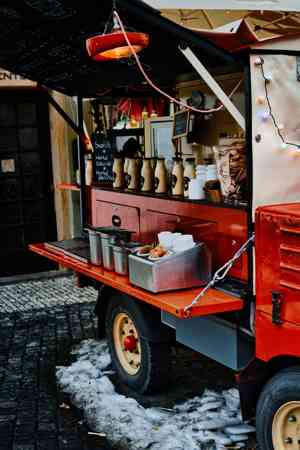
You’ve picked a name, planned a menu, and found a truck. Before Halifax Regional Municipality will hand you a food vending licence, it wants to see proof of insurance, not just a completed form. Food truck insurance in Halifax has to cover four separate things: your liability to the public, the vehicle itself, the equipment inside it, and what happens if someone says your food made them sick. Miss one of those and you either can’t get licensed, or you’re covering a loss yourself.

What Food Truck Insurance Needs to Cover Before Halifax Issues a Licence
HRM’s food vending licence application asks for proof of liability insurance of $2,000,000, with Halifax Regional Municipality named as an additional insured on the policy. Being named as an additional insured means HRM is protected too if a claim comes out of something your truck did while operating on municipal property. Along with that proof, the application asks for a criminal record check, photos of the truck, a valid health permit, your vehicle registration, and a safety inspection that checks fire extinguishers, propane and electrical connections, exhaust hoods, and ventilation. Annual fees run $1,150 for a food service vehicle, $330 for a stand, and $200 for a bicycle wagon. None of the rest of the application moves forward without that insurance in place, so it’s usually the first call worth making once you’ve settled on a truck and a menu.
A Commercial General Liability Policy Is the Foundation
Commercial general liability (CGL) insurance covers claims that someone was hurt, or their property was damaged, because of your business. For a food truck, that’s the $2 million HRM wants to see on paper, and it’s the coverage that responds if a customer trips over your generator cord, a propane tank tips at a farmers’ market, or your awning catches someone in the wind. The coverage works the same way it does for a restaurant kitchen on Spring Garden Road. The truck is just the building, on wheels.
Your Truck Needs Its Own Commercial Auto Policy
A personal auto policy is priced and written around commuting and errands, not a vehicle that sits parked for six hours a day with a fryer running and a line of customers at the window. Commercial auto insurance rates the vehicle for what it actually does: driving to a location, parking to sell, and driving home, plus higher liability limits than most personal policies carry. That distinction matters if your truck is ever in a crash on the Bedford Highway or downtown, because a personal insurer can deny a claim outright once it learns the vehicle is used commercially.

What Happens When the Fryer Catches Fire or a Propane Line Fails?
Contents and equipment coverage protects the flat-top, the fryer, the point-of-sale system, and the food in your coolers, not just the truck’s engine and frame. HRM’s own inspection already checks the fire extinguishers, propane lines, exhaust hood, and ventilation before it licenses you, so the same equipment an inspector is looking at is exactly what this piece of the policy needs to list by value, not a rough guess.
Does Your Coverage Follow You From the Waterfront to a Private Booking?
Most trucks don’t work one address. A season might mean HRM parks, a brewery patio, a private wedding, and a company lunch, all in different weeks. Ask your broker directly whether the policy covers you wherever you park, not just a fixed location listed on the paperwork. If you also cater private events or set up alongside other seasonal vendors, that mix of work is worth flagging up front rather than after a booking is already confirmed. Your policy also needs product liability built in, which is a different piece of coverage from the slip-and-fall side of CGL. It responds if a customer claims your food made them sick, rather than an injury on your property.
A quick note from Rayanur Rahman: when you’re two weeks from opening day and still comparing quotes, a phone call gets you further than an online form. As a commercial insurance broker based in Bedford, I can usually turn a food truck package around fast enough to meet a licence deadline, and you’re reaching me directly, not a call centre.
What to Actually Do This Week
- Get a certificate of insurance for at least $2,000,000 in liability coverage before you submit your HRM vending application, with Halifax Regional Municipality listed as an additional insured.
- Ask your insurer directly whether your vehicle is rated for commercial use, not personal use with occasional business driving.
- List your actual equipment, fryer, flat-top, generator, point-of-sale system, by value on the contents portion of the policy, not a rough estimate.
- Confirm the policy covers you at every location you plan to sell from, not just the address on the application.
- Make sure product liability is part of the package, in case a customer ever claims your food made them sick.
- Keep a digital copy of your certificate of insurance on your phone. HRM’s inspector and most event organizers will ask to see it.
None of this is complicated once someone lays it out, but it’s easy to assume one “food truck policy” covers all four pieces when it doesn’t. HRM’s own application is really a checklist for what a truck owner needs anyway: proof you can pay if something goes wrong, proof the vehicle is insured for what it actually does, and proof the equipment inside it is covered for its real value. Get that sorted before opening day, not after the first grease fire or fender bender.
Not Sure Your Food Truck Policy Meets HRM’s Requirements?
Book a call before you submit your vending application, or after, if you just want a second look at what you already have.
About the author. Rayanur Rahman is a commercial insurance broker with Western Financial Group in Bedford, Nova Scotia. He places commercial policies for restaurants, contractors, trucking and transportation companies and commercial property owners across the Halifax Regional Municipality, with access to the standard Canadian insurers and to specialty and MGA markets. He will also read a policy you already have and tell you plainly whether it fits what Halifax actually requires. Reach him at 902-321-1712 or book a 30 minute call.
Sources: Halifax Regional Municipality, food vending licence requirements. Western Financial Group, fleet insurance guide. Photo by Ruben Boekeloo on Pexels. Photo by Tima Miroshnichenko on Pexels. General information only, not advice on your specific policy. Check your own wording.
Leave a Reply