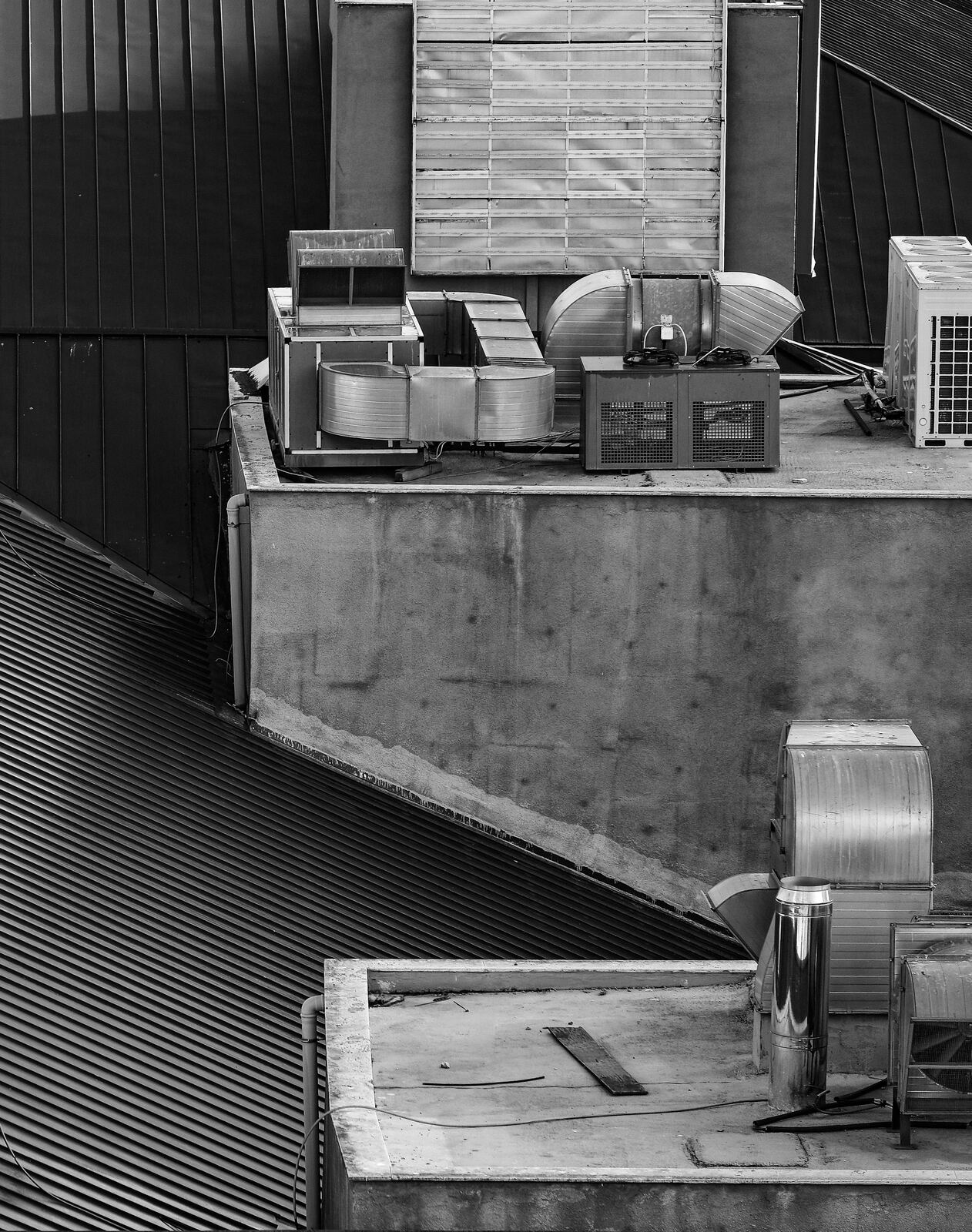
The walk-in cooler at a Dartmouth restaurant quits mid-service on a Friday night. A rooftop HVAC unit on a Burnside warehouse trips its motor in July and the building goes without cooling for a week. Here’s the direct answer: your standard commercial property policy probably will not pay for either one. Property insurance covers named perils, the specific events like fire, wind and theft a policy actually lists. A mechanical or electrical system that simply breaks down on its own usually falls outside that list. The coverage built to close that gap is called equipment breakdown insurance, and the only bad time to find out whether you have it is the day something fails.

What Equipment Breakdown Insurance Actually Covers
Equipment breakdown insurance, sometimes still called boiler and machinery coverage under its older name, responds to the sudden, accidental breakdown of mechanical, electrical or pressure equipment. That’s a wider list than the name suggests: walk-in coolers and reach-in fridges, kitchen line equipment, rooftop HVAC units, electrical panels and wiring, boilers, elevators, and the servers or point-of-sale systems running a business day to day. Refrigeration and air conditioning are the single biggest source of breakdown claims, according to HSB Canada, the Canadian arm of Munich Re that underwrites much of this coverage in this country. A compressor seizing, a motor burning out, an electrical panel arcing internally: those are the kinds of failures this coverage is built to answer, not a storm or a break-in.
Why Your Property Policy Leaves This Gap
This isn’t an oversight in your policy. Standard commercial property insurance is built to answer external, sudden events, which is what a named peril actually means, and it typically excludes, by name, loss caused by the mechanical breakdown or electrical arcing of your own equipment. HSB Canada’s own guidance on the coverage states that plainly: a standard property form carves this out because equipment failure is treated as a different kind of risk than fire or storm damage, priced and underwritten separately. That’s why equipment breakdown coverage is usually sold as an endorsement added to an existing property policy, or as its own standalone policy from a specialty insurer, rather than something folded automatically into a base package.
Does Equipment Breakdown Insurance Cover Normal Wear and Tear?
No. It responds to a sudden, accidental failure, not to a system that finally gives out after years of deferred maintenance. Gradual deterioration, rust and corrosion, and damage tied to skipped servicing are standard exclusions, and insurers can and do ask for maintenance records after a claim. Keeping basic service records on your major equipment is one of the cheapest things you can do to protect a future claim.
Who in Halifax Actually Needs This
Three kinds of business ask me about this most. A restaurant with a walk-in cooler, reach-ins and a full line of cooking equipment carries more of this exposure than almost anyone, since one failed compressor can shut a kitchen down the same night. A commercial landlord running the shared HVAC, elevators and electrical systems for a whole building is exposed on a different scale, since one mechanical failure there affects every tenant, not just one unit. A contractor with a shop full of compressors, generators and specialized equipment carries a smaller version of the same risk. If none of those describes your business exactly, it’s still worth asking your broker, since it comes up more often than owners expect across other kinds of businesses too.

I’m Rayanur Rahman, a commercial insurance broker with Western Financial Group, and equipment breakdown is one of the coverages I check on every property review, right alongside the standard fire and liability limits.
How This Fits With the Rest of Your Coverage
Equipment breakdown coverage usually works alongside your existing property and business interruption coverage rather than replacing anything. A covered breakdown that spoils a walk-in full of inventory, or shuts a kitchen down for a couple of days, can trigger the spoilage and income-loss parts of your policy, but only once the breakdown itself is a covered event. HSB Canada’s own claims examples make the range concrete: one Canadian meat retailer’s freezer rupture led to more than $22,000 in spoilage losses, and a shopping mall’s electrical arcing outage cost more than $230,000 in total losses, figures the insurer publishes as illustrations of what this coverage is built to answer. Canada’s commercial property market has also been getting cheaper to insure in for more than two years running: property rates fell 8 percent nationally in the second quarter of 2026, after a 6 percent drop in the first quarter, according to Canadian Underwriter’s reporting on the broader market. That makes now a reasonable time to ask what adding this coverage would actually cost, rather than assuming it’s out of reach.

I answer my own phone. When a compressor goes on a Saturday, the call about it doesn’t wait for a Monday callback from someone who has never seen your kitchen or your building. That’s part of what giving Halifax business owners the best commercial insurance service I can means to me: a same-day answer instead of three voicemails.
What to Actually Do This Week
- Ask your broker directly whether your current property policy already includes equipment breakdown coverage, or whether it needs to be added as an endorsement.
- Make a short list of the specific equipment that would actually shut you down if it failed: a walk-in cooler, a rooftop unit, a main electrical panel, an elevator.
- Check whether the coverage extends to spoilage and lost income that follows a covered breakdown, not just the mechanical repair itself.
- Keep basic maintenance and service records on your major equipment, since insurers can ask for them after a claim.
- If you lease or manage space in a multi-tenant building, confirm in writing whether the landlord’s policy or your own is responsible for equipment serving shared areas.
- Revisit this at your next renewal alongside the rest of your property coverage, instead of treating it as a one-time decision.
The Equipment That Would Actually Stop You
None of this means every piece of equipment in your business needs its own line of coverage. It means the equipment that would actually stop you from operating, whether that’s a walk-in cooler or the panel that runs your building, deserves a real answer about whether your policy responds if it fails. A softer market for property insurance makes this a cheaper question to ask than it has been in years. The businesses that get caught without this coverage are usually the ones who assumed their property policy already included it.
Wondering What Happens If Equipment Fails?
If a cooler, a panel or a rooftop unit at your business failed tomorrow, tell me what you’re running and I’ll tell you plainly whether your policy would respond.
About the author. Rayanur Rahman is a commercial insurance broker with Western Financial Group in Bedford, Nova Scotia. He places commercial policies for restaurants, contractors, trucking and transportation companies and commercial property owners across the Halifax Regional Municipality, with access to the standard Canadian insurers and to specialty and MGA markets. He has walked through enough Bedford kitchens and Burnside shops to know which equipment failures actually shut a business down and which ones are just an inconvenience. Reach him at 902-321-1712 or book a 30 minute call.
Sources: HSB Canada (Munich Re): Why Do I Need Equipment Breakdown Coverage. Canadian Underwriter: Where Commercial Insurance Rates Are Heading. Photo by Crab Lens on Pexels. Photo by Vjanodic WERSOV on Pexels. Photo by Pavel Danilyuk on Pexels. General information only, not advice on your specific policy. Check your own wording.
Leave a Reply