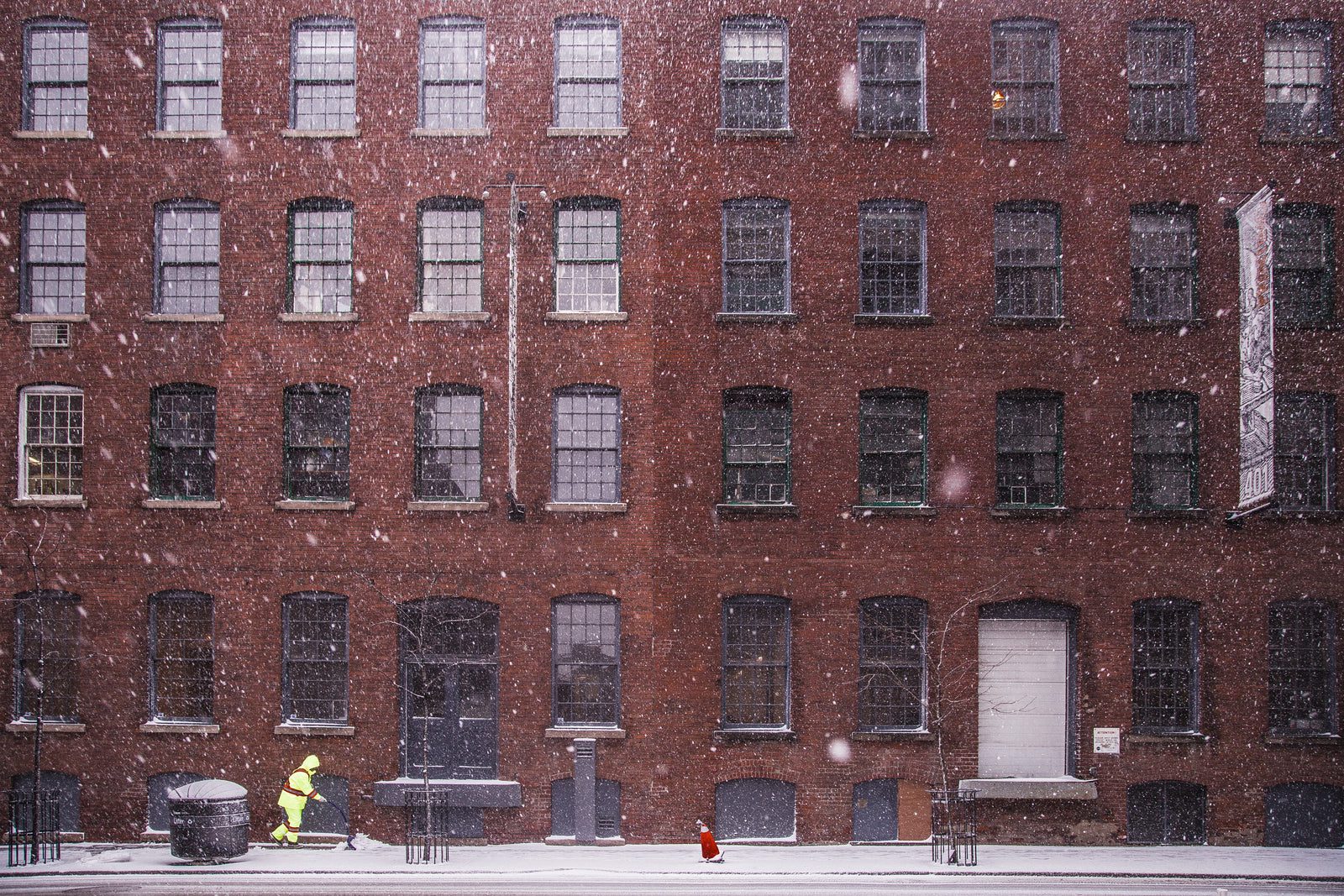
If you’ve been shoveling the sidewalk outside your shop every winter out of habit, you can probably stop. Halifax Regional Municipality now handles snow removal on every public sidewalk in the region itself, on a posted schedule. That part of the job isn’t your responsibility anymore. What still is: your parking lot, your steps, your entrance, and the patio if you run one seasonally. Get those wrong and the exposure isn’t a bylaw complaint, it’s a slip and fall claim with your business’s name on the lease. Here’s exactly where the line sits this winter, and what the municipality actually promises to clear, and by when.

Snow Removal on the Sidewalk Is Now Halifax’s Job
Halifax Regional Municipality clears every public sidewalk in the region itself. That’s the municipality’s own current policy, and it covers the whole of HRM, not just the peninsula. You don’t need to shovel the public sidewalk in front of your store, and nothing in municipal by-law asks you to anymore.
What you can do is report it if your stretch is running behind, but only once the posted timeline has actually passed. Crews follow a set schedule by street priority, and as of November 2026 it breaks down like this: downtown Halifax and Dartmouth sidewalks get cleared within 12 hours of a storm ending, once 5 cm has fallen. Sidewalks along main arterials and school drop-off zones follow the same 12-hour window but wait for 15 cm. Halifax Transit route sidewalks get 18 hours, and ordinary residential sidewalks get 36. A storm that dumps more than 30 cm, or turns into a full blizzard, can push every one of those numbers back.
What’s Still Yours: the Lot, the Steps, the Door
The municipality’s job stops at the public sidewalk. Your parking lot, your steps, and the stretch of walkway from the sidewalk to your own door all sit with you, the same as a driveway sits with a homeowner. Nova Scotia’s Occupiers’ Liability Act puts a legal duty behind that, not just a courtesy. As the occupier of your premises, you owe a duty to take such care as is reasonable in the circumstances to see that anyone entering is reasonably safe while they’re on it.
That duty runs to a parking lot the same way it runs to a storefront, and it has shown up in court here before. In one Halifax case, a woman slipped on black ice on a public sidewalk on Hollis Street, right beside the entrance to a commercial parking lot. The question of whether the lot’s owner bore any responsibility for ice that may have fed from its own melting snowbank went all the way to the Nova Scotia Court of Appeal. You don’t need the legal background to take the lesson: ice doesn’t respect a property line, and a claim over it can land on whoever owns the ground it started on. That’s exactly the kind of exposure your commercial liability coverage is built around.

Running a Patio? You Handle the Snow Removal There
If your restaurant or café holds an annual sidewalk café licence, the city is explicit about one thing: you, not HRM, are responsible for snow removal on the patio and any temporary sidewalk that goes with it. That includes windrows, the ridge of snow municipal plows leave behind, if one builds up against your patio because it’s sitting in the way. Keep the path clear enough that the minimum width the city requires, and any cane-detectable barriers along it, stay usable all winter, not just on the days you remember to check.
Where the Snow Can’t Go: Piling Rules and Fines
Wherever you clear snow from, the municipality’s by-law is specific about where it can’t end up: the street or the public sidewalk. Push a lot’s worth of snow out onto the sidewalk you no longer have to clear, and the municipality can post an order at your civic address giving you 24 hours to move it. Miss that window and the municipality clears it itself and adds the cost to your property as a lien, collected the same way as property tax, on top of a summary offence ticket that runs at least $100. The same logic applies to anything you’ve got sitting on the sidewalk through the winter: sandwich boards and portable signs are an easy thing to forget about until they’re blocking a plow route.
Steps to Get Your Winter Coverage Straight
- Check the municipality’s posted priority level for your street, so you know the real clearing window before you call 311 about a public sidewalk.
- Line up a contractor for your own lot and entrance now, before the first real storm, rather than after your steps have already iced over.
- Walk your own property the way an inspector would: the steps, the ramp, and the path from the public sidewalk to your door.
- If you run a seasonal patio, confirm your winter plan covers the patio and its temporary sidewalk before the licence season starts.
- Never push cleared snow onto the public sidewalk or street, even temporarily. Pile it on your own property instead.
- Pull in sandwich boards and other portable signage once the season turns, so they’re not sitting in a plow’s way.
- If an entrance or lot has been a trouble spot before, keep a written record of when it was salted and cleared. That’s the kind of documentation that actually holds up if a slip ever turns into a claim.
What Snow Removal Actually Costs You
Clearing your own lot and entrance isn’t free, but it isn’t the biggest expense in this picture either. As of November 2026, snow plow services in the Halifax area typically run $75 to $150 an hour for standard residential or small commercial work, more for a large lot or an emergency callout during a major storm. The municipality’s sidewalk clearing, by contrast, is already covered through your property taxes. The real cost sits on the other side of this: a minimum $100 fine and a lien against your property if you’re caught piling snow where it doesn’t belong, and an occupier’s liability claim if someone goes down on ice you should have cleared. Both of those cost more than a winter’s worth of salt and a plow contract.
The Bottom Line
The line is simpler than it used to be. Halifax clears the public sidewalk. You clear everything on your own side of the property line: your lot, your steps, your patio if you run one, and you keep whatever you clear off the sidewalk and street. Get that much right and you’ve covered most of what trips up Halifax business owners every winter. For more on getting your storefront ready for the season, the Halifax Business Blog’s piece on preparing for a winter power outage and its storefront checklist cover other pieces worth squaring away before the snow really starts, and the rest of the Halifax Business Blog has more on running a business here.
One practical note, since this is what I do for a living. If it’s been a while since anyone actually read your policy against what’s sitting outside your own door, parking lot included, I’ll read it and tell you plainly whether it still fits.
Getting Your Property Ready for Winter?
If you want a plain read on your coverage before the snow piles up, or anything else about running a business in Halifax, I’m happy to help.
About the author. Rayanur Rahman writes about running and growing a business in Halifax. He is a commercial insurance broker with Western Financial Group in Bedford, Nova Scotia, and works with businesses of every kind across the Halifax Regional Municipality. Reach him at 902-321-1712 or book a 30 minute call.
Sources: Halifax Regional Municipality: Snow Clearing Service Standards. Halifax Regional Municipality: Do Your Part. Halifax Regional Municipality: Sidewalk Café Licences. Government of Nova Scotia: Occupiers’ Liability Act. Photo by Nellie Adamyan on Unsplash. Photo by Matthew Henry via Shopify Burst. Rules, fees and timelines checked November 2026 and can change. General information only, not legal advice.
Leave a Reply